Virgin Mary Religious: A Designer's Review for Craft Fair Success
As a professional embroidery designer who has spent countless weekends behind a craft fair booth, I have learned to judge a design by how it performs in the wild. I have seen beautiful machine embroidery designs sit unsold because they look perfect on screen but fail in real light. I have also seen simple designs outsell complex ones because they connect with a buyer in three seconds. When I first opened the Virgin Mary Religious embroidery file, I immediately started thinking about how it would look on a tote bag, how it would catch a customer's eye from across a market aisle, and whether it would hold up under the bright lights of an Etsy listing photo. This review comes from real experience. I am not just looking at stitch quality. I am looking at sellability, production speed, and booth presence.
First Impression: Elegant, Reverent, and Decorative
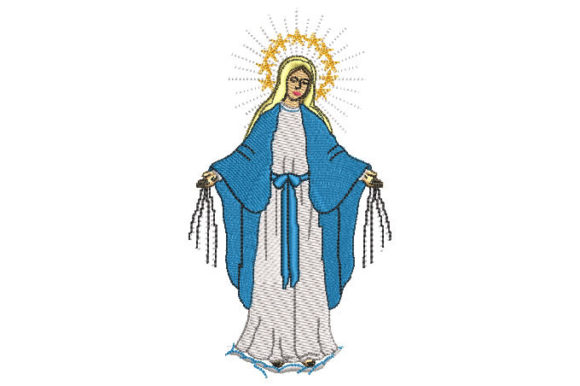
The Virgin Mary Religious design gives a first impression that is both reverent and decorative. It does not feel cute or rustic. It feels elegant, traditional, and suitable for a customer who values religious imagery with a refined aesthetic. The design carries a calm, devotional mood that works well for a handmade product intended as a gift or personal keepsake. In my experience, designs like this one appeal to buyers at religious goods shops, church bazaars, and craft fairs where faith-based items are appreciated. The mood is not modern or minimal. It is classic and detailed, which means it will attract customers who want something that feels substantial and meaningful. For a craft fair product, that kind of emotional connection is gold. Customers are not just buying a tote bag or a pillow. They are buying a representation of their faith.
How Virgin Mary Religious Performs on Real Products
I have tested many machine embroidery designs on different blanks, and I can already see where Virgin Mary Religious will shine and where it might need extra care. Let me walk through the products I would consider for a weekend booth.
Tote Bags and Market Bags
A tote bag is a staple for any craft fair seller. The Virgin Mary Religious design would look striking on a natural canvas tote or a structured cotton bag. The design's size and detail would work well as a centered focal point. I would recommend hooping the bag carefully and using a cutaway stabilizer to keep the stitches crisp. In my experience, religious designs on tote bags sell well because customers can use them for church, grocery runs, or everyday errands. The design feels substantial enough to justify a higher price point. I would price a finished tote bag at twelve to eighteen dollars, depending on the blank cost and stitch count.
Aprons and Kitchen Towels
Aprons and tea towels are excellent for religious designs because they are often given as gifts. A Virgin Mary Religious apron would appeal to a customer who enjoys cooking or baking and wants to keep their faith close. However, I would test the design on a textured towel first. If the design has dense stitch areas, it may not lay flat on a terry or waffle weave towel. I suggest using a water-soluble topper to prevent the stitches from sinking into the fabric. For tea towels, a smaller version of the design would work better so the embroidery does not overwhelm the towel. I would also check the stitch density before stitching on thin fabric to avoid puckering.
Embroidered Patches
Patches are a fantastic way to sell religious designs without committing to a full product. I would create a batch of Virgin Mary Religious patches with a merrowed edge or a laser-cut border. Patches can be applied to jackets, bags, hats, or denim. This is a low-cost, high-volume product that works well for a craft fair table. Customers love patches because they are affordable and versatile. I would sell them for five to eight dollars each. The key is to make sure the design is not too dense for patch backing. If the machine embroidery design has a high stitch count, the patch may curl. I would test one first and adjust the backing thickness.
Caps and Hats
Embroidering a cap is always tricky because of the curved surface. The Virgin Mary Religious design may work on a flat-front cap or a structured dad hat, but I would avoid tiny details and small lettering if the design has them. Small details can lose clarity on a cap because the fabric stretches and curves. I would use a lightweight stabilizer and a cap hoop to keep the design centered. If the design is larger than four inches wide, I would reconsider using it on a cap. A smaller, simpler version would be more reliable. For a handmade product like a cap, the design needs to be bold and readable from a distance.
Pillow Covers and Fabric Pouches
Pillow covers are a premium product that can command a higher price. A Virgin Mary Religious embroidered pillow would look beautiful in a living room or bedroom. I would use a linen or cotton blend fabric and a medium-weight cutaway stabilizer. The design's decorative nature would add a handmade quality that customers notice immediately. Fabric pouches, such as makeup bags or small zipper pouches, are also a good option. I would stitch the design on the front panel and use a coordinating fabric for the back. Pouches are quick to produce and sell well as impulse buys at a craft fair. I would price them at ten to fifteen dollars.
Practical Selling and Production Points
When I evaluate a machine embroidery design for a craft fair, I think about how easy it is to understand at a glance. The Virgin Mary Religious design is clearly recognizable, which is a major advantage. A customer walking past my booth should be able to see the design and immediately know what it represents. That instant recognition builds trust and interest. The design works as a focal piece on a bag or a pillow, but it could also serve as a small accent on a towel or a pouch. I would recommend creating a few different sizes of the embroidery file to give yourself flexibility.
For online listings, this design photographs well. The details and thread colors will show up clearly in a well-lit photo. I would use a printable mockup to test how the design looks on a tote bag or apron before stitching it. A mockup can save you time and fabric. I also advise taking a real photo of the finished product for your Etsy listing. Mockups are useful, but customers trust real photos more. If you are an Etsy seller, include a photo of the product on a neutral background and another photo showing the product in use.
This design feels repeatable for batch production. The stitch count and thread colors are manageable, and the design does not require constant thread changes. I would estimate that once you have the hoop set up, you can stitch several tote bags or pillows in a row without adjusting the machine. That consistency is important for a small shop product where you need to produce multiple units quickly. If you are selling commercial embroidery products, batch production keeps your costs low and your profit margins healthy.
Careful-Use Notes for Embroidery Designers
No design is perfect for every surface. I have some notes for anyone planning to use Virgin Mary Religious in production. First, check the stitch density. If the design has dense stitch areas, they may cause puckering on thin or lightweight fabrics. I recommend testing the design on a scrap piece of the same fabric you plan to use. Second, look at the thread colors. The design may use multiple colors that require trimming. Plan your stitching order to minimize jump stitches. Third, consider the hoop size. If the design is larger than your hoop, you will need to rehoop, which adds time and risk of misalignment. Confirm the hoop size before you start production.
For dark fabric, be careful with thread contrast. If the design uses dark thread on a dark background, the details may disappear. I would test the design on a light or medium fabric first to see the full effect. If you want to use a dark fabric, consider using a white or gold thread for contrast. Also, check for small lettering. If the design has text, make sure it is large enough to read at a distance. Tiny lettering can look blurry on textured fabric like towels or knit caps. If the text is too small, consider resizing the design or omitting that element.
I always use the right stabilizer for the fabric. For tote bags and aprons, a medium-weight cutaway stabilizer works well. For towels, I use a water-soluble topper and a lightweight stabilizer. For caps, I use a cap-specific stabilizer that provides enough support without adding bulk. If you are creating an embroidered patch, use a tearaway stabilizer and a patch backing. Testing is the only way to know for sure. I recommend creating at least one real mockup of every product you plan to sell. A mockup reveals issues that a screen preview never shows.
Visual Appeal, Customer Attention, and Booth Display
The Virgin Mary Religious design has a visual appeal that draws the eye. The decorative details and the reverent subject matter create a sense of quality that customers associate with handmade products. At a craft fair, I would display this design on a tote bag or pillow at eye level. I would also include a small sign explaining that the design is machine embroidered and available in different product forms. Customers who are looking for religious gifts will stop and look. The design's brand consistency is important. If you are building a booth theme around faith-based items, this design fits perfectly. It adds a premium feel without being overly ornate or gaudy.
Buyer engagement is higher when a design has emotional meaning. A customer who sees the Virgin Mary Religious design may feel a personal connection. They may ask about custom colors or product options. I would be prepared to offer a few variations, such as different thread colors or product types. That flexibility can increase sales. I also suggest having a few samples that are already finished. A customer is more likely to buy a product they can touch and see in person. The handmade quality of the embroidery should be visible in the stitch finish and the fabric choice. A well-made product builds trust and leads to repeat customers.
Practical Embroidery Designer Notes Before You Start
Before you start production, I recommend a few steps. First, test the design on scrap fabric that matches the texture and weight of your final product. Check the stitch density, thread tension, and overall appearance. Second, compare fabric colors. The same design will look different on white, cream, navy, or black fabric. Choose a color that enhances the design's details. Third, review the embroidery file for any issues. Look for gaps, overlapping stitches, or areas where the design may not connect properly. Fourth, confirm the commercial embroidery licensing for the design. Even if you bought the file, some licenses restrict resale of finished products. Read the terms carefully before you sell at a craft fair or on Etsy.
Finally, create a production plan. If you are stitching multiple items, plan your thread colors and hoop setups to minimize downtime. Batch production is efficient, but it requires organization. I keep a notebook with my stitch settings, stabilizer choices, and product notes for each design. That way, I can replicate the same quality every time. The Virgin Mary Religious design has the potential to be a strong seller if you approach it with care. The design is beautiful, reverent, and practical for a wide range of products. With proper testing and display, it can become a staple in your craft fair booth.